Galicia coastal road trip itinerary
Some links in this guide are affiliate links — if you book through them we may earn a small commission at no extra cost to you. It never changes what we recommend. Full disclosure.
Embarking on a galicia coastal road trip itinerary is an adventure that promises dramatic landscapes, ancient traditions, and a culinary journey unlike anywhere else in Spain. Before you even turn the key, here’s the one thing you absolutely must know: Galicia’s weather is famously unpredictable, even in summer. Pack layers, prepare for mists and sunshine in the same day, and embrace the wild, untamed beauty this region offers.

This article contains affiliate links. If you book through one, Spain Destination may earn a small commission at no extra cost to you. See the full affiliate disclosure →
Quick Answer: Galicia
the road trip is best undertaken between May and October for milder weather and longer daylight hours, though the region’s unique charm persists year-round. Allow at least 7-10 days to fully explore its diverse coastlines, from the tranquil Rías Baixas to the rugged Costa da Morte, experiencing historical towns, fresh seafood, and Celtic heritage. Those months are also when the best beaches in Galicia are actually swimmable, at least for the brave.
Planning Your Galicia: Getting There and Around
Your journey begins with arrival. The two main international airports are Santiago de Compostela (SCQ) and A Coruña (LCG). Santiago is often the more convenient option, being centrally located and well-connected. Once you land, a rental car is non-negotiable for any decent the road trip. Public transport along the coast is limited and will severely restrict your flexibility.
I recommend booking your car hire well in advance, especially if you’re travelling during peak season (July and August). Prices for a compact car can range from €25-€45 per day in the low season, jumping to €50-€80 per day in summer. Expect to pay extra for full insurance coverage (around €15-€25 daily), which I always advise for peace of mind on unfamiliar roads. Major rental companies like Europcar, Avis, and Hertz operate at both airports. Pick up your vehicle and hit the road.
Driving in Galicia is generally pleasant. Roads are well-maintained, though many coastal routes are winding and narrow, especially when passing through smaller villages. GPS is essential, but be aware that mobile signal can be patchy in very remote areas, so consider downloading offline maps. Fuel prices are comparable to the rest of Spain, currently around €1.60-€1.75 per litre for unleaded. Parking can be a challenge in popular towns; look for designated car parks (often paid, €1.50-€2.50 per hour) or free street parking further from the centre, if you can find it. Some of those detours are the point; the green inland villages of Galicia reward anyone willing to leave the coastal road.
Here’s a rough breakdown of typical car rental costs for a week:
| Item | Low Season (approx. per week) | High Season (approx. per week) |
|---|---|---|
| Compact Car Rental | €175 – €315 | €350 – €560 |
| Full Insurance | €105 – €175 | €105 – €175 |
| Fuel (estimate for 1000km) | €100 – €120 | €100 – €120 |
| Parking (estimate) | €20 – €40 | €30 – €60 |
| Total Estimated Cost | €400 – €650 | €585 – €915 |
The Rías Baixas: From Sandy Shores to Historic Villages
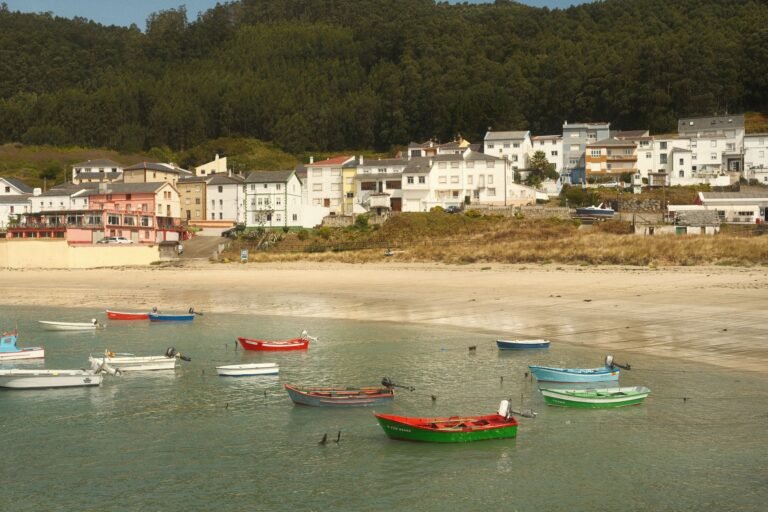
Starting your journey south from Santiago, you’ll enter the Rías Baixas, famous for its calm estuaries, sandy beaches, and exceptional seafood. This area is generally milder and sunnier than the wilder northern coast.
Your first major stop should be Combarro, a tiny fishing village that feels like a step back in time. It’s unique for its “hórreos” (traditional granaries on stilts) that line the waterfront and its stone “cruceiros” (stone crosses). Wander the narrow, pedestrian-only streets for an hour or two. Parking is available at the edge of town for approximately €1.50 per hour. Don’t rush through; grab a coffee and simply absorb the atmosphere.
Next, head to O Grove, often called the seafood capital of Galicia. This peninsula is connected to the mainland by a narrow causeway and is an excellent base for exploring. From O Grove, you can take a “bateas” tour – these boats take you out to the mussel, oyster, and scallop rafts. A typical 1.5-hour tour costs around €15-€20 per person and often includes a tasting of fresh mussels right on board. It’s absolutely worth it for a genuine insight into local aquaculture. Many tours depart from the port in O Grove between 11:00 and 18:00 daily during summer.
Just across the water from O Grove is the island of La Toja (A Toxa), known for its thermal spas and soap factory. While the spa treatments can be pricey (expect €70+ for a basic massage), it’s pleasant to stroll around, visit the unique Chapel of Shells (fully covered in scallop shells), and perhaps buy some local soaps. Entry to the chapel is free and it’s open during daylight hours.
For beach lovers, the nearby Praia A Lanzada is a long, sweeping stretch of golden sand, popular for surfing and sunbathing. It’s easily accessible and has plenty of free parking. Even on a cloudy day, the dramatic waves are a sight to behold. For something a little different, explore the small, coved beaches around San Vicente do Mar.
Don’t miss Cambados, a designated “Historic-Artistic Site” and the capital of Albariño wine country. While you can’t taste the wine, you can still appreciate the beautiful Pazo de Fefiñanes, an impressive manor house with an archway that frames the town square. The square itself is a great spot to try some local empanadas or “pulpo a feira” (Galician-style octopus) at one of the many restaurants. You can easily spend two to three hours exploring the town and its quaint streets. Most shops are open from 10:00-14:00 and 17:00-20:00.
Consider dedicating 3-4 days to the Rías Baixas alone. It’s an area that encourages slow travel and indulgence in the local culture and cuisine.
Costa da Morte: Where the World Ends
North of the Rías Baixas, the landscape shifts dramatically as you enter the Costa da Morte, or “Coast of Death.” This rugged stretch of coastline earned its name from the countless shipwrecks that occurred here over centuries. It’s a place of wild beauty, dramatic cliffs, and a profound sense of isolation. It truly feels like the edge of the known world.
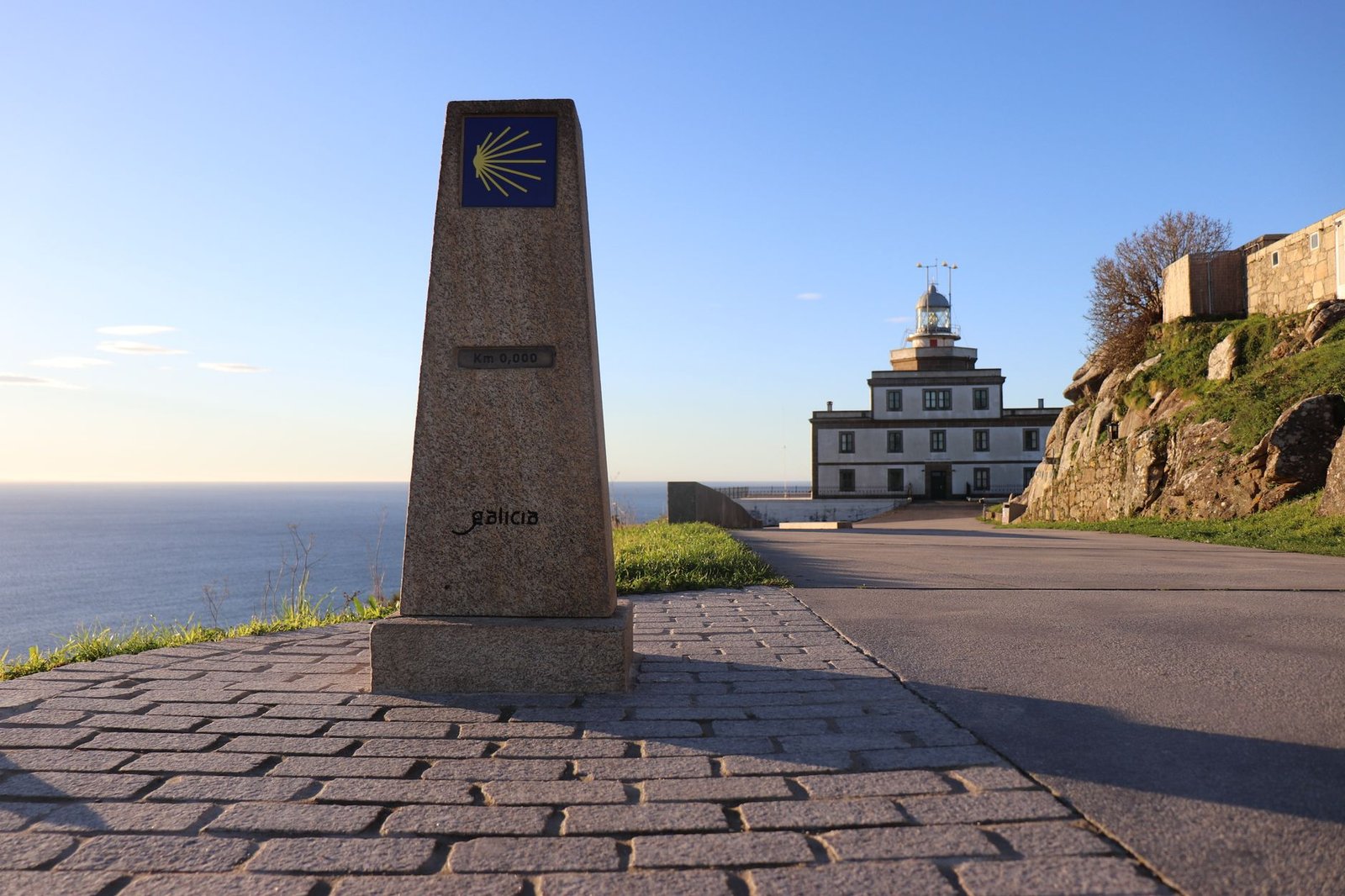
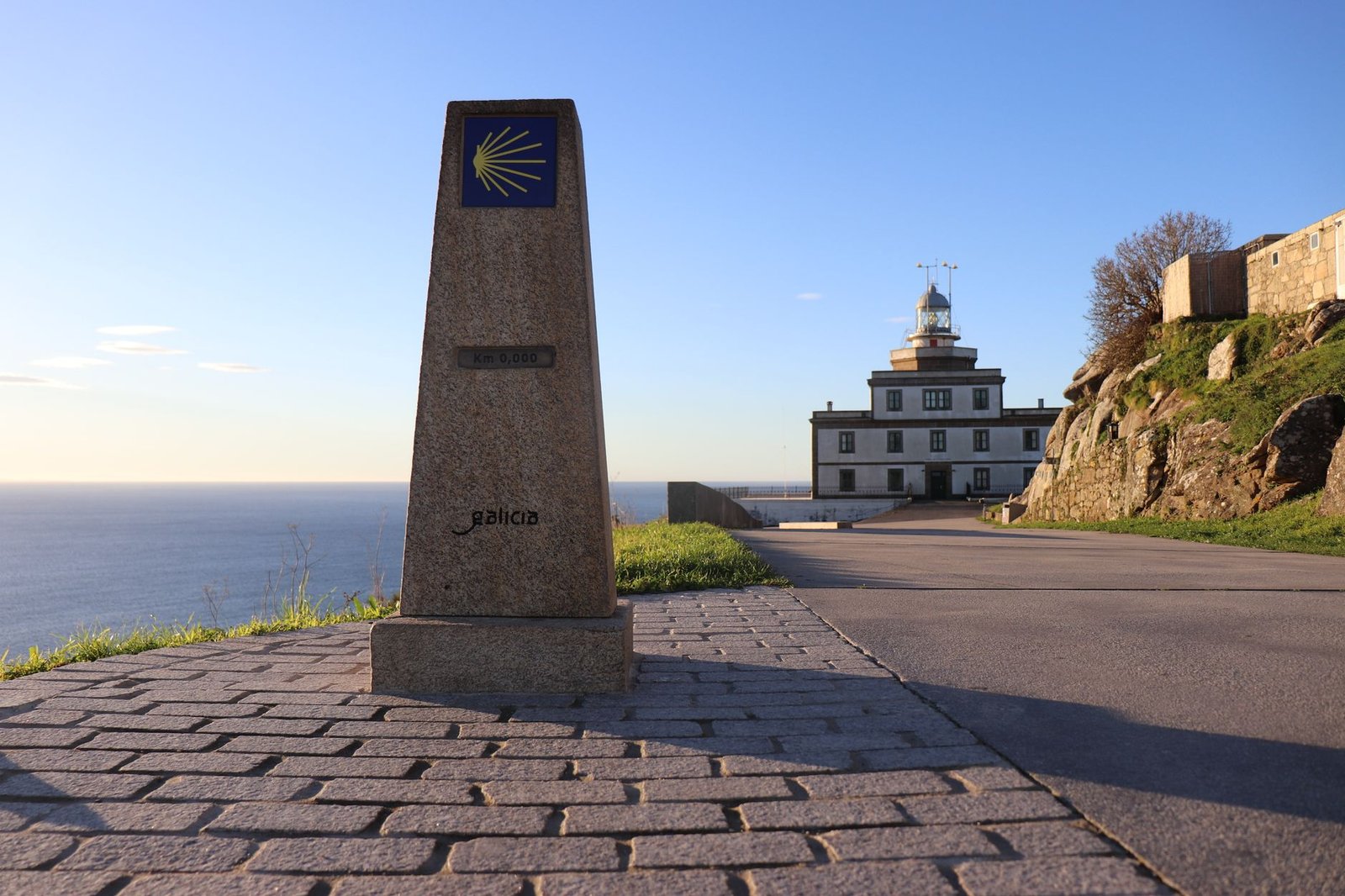
One of the most iconic stops is Cape Fisterra (Fisterra in Galician), historically believed to be the westernmost point of continental Europe. The lighthouse here, Faro de Fisterra, offers incredible panoramic views, especially at sunset. The drive up to the lighthouse is straightforward, and there’s a small car park (costing €2-€3 for a few hours). You can visit the lighthouse grounds and the “0 km” marker for free, usually open 24 hours, though the small cafe and shop have typical daytime hours (10:00-19:00). It’s worth the journey, but prepare for strong winds even on a sunny day.

Nearby, the village of Muxía is home to the Santuario da Virxe da Barca, a sanctuary perched precariously on the rocks overlooking the ocean. Legend has it that the Virgin Mary appeared here in a stone boat. The stones around the sanctuary, particularly the “Pedra de Abalar” (rocking stone) and “Pedra dos Cadrís” (kidney stone), are said to have healing properties. It’s a place of pilgrimage and quiet contemplation, with free entry. The coastal walk around Muxía is stunning, offering views of dramatic waves crashing against the granite. Allow 1-2 hours for the sanctuary and a short walk.
Driving this coast requires attention. The roads are often narrow and winding, sometimes with steep drops to the sea. Fog can roll in quickly, reducing visibility. Take your time. While the beauty is undeniable, this isn’t a place for quick stops; you need to embrace the elements.
Other points of interest along the Costa da Morte include:
- Ézaro Waterfall (Fervenza do Ézaro): The only waterfall in mainland Europe that flows directly into the ocean. Check the hydroelectric dam’s schedule if you want to see it at its most powerful, as the flow can be controlled. It’s open to the public daily, with special illumination on Saturday nights in summer (check local schedules, usually 22:00-23:00).
- Camariñas: A small fishing town known for its lace-making tradition. You can visit the Lace Museum (Museo do Encaixe) for €3 entry, open 10:00-14:00 and 16:00-19:00 (closed Mondays).
- Cabo Vilán Lighthouse: One of the most powerful lighthouses on the Spanish coast, offering more spectacular views and a visitor centre (free entry, open 10:00-14:00 and 16:00-19:00).
- Laxe Beach: A relatively sheltered beach, a good spot for a break from the rugged cliffs, with calm waters for swimming. Free parking usually available along the promenade.
The Costa da Morte demands at least 2-3 full days to properly experience its raw power and historical significance.
A Coruña and the Northern Coast: Roman History and Urban Charms
Continuing your the road trip northwards, you’ll reach A Coruña, a lively city with a strong maritime heritage. The city’s crown jewel is the Tower of Hercules (Torre de Hércules), the oldest Roman lighthouse still in operation. It’s a UNESCO World Heritage site and a must-see. You can climb to the top for panoramic views of the city and coastline. Entry costs €3 per person (free on Mondays), and it’s open daily from 10:00-19:00 (later in summer). Allow about 1.5-2 hours for your visit.
A Coruña also boasts a beautiful promenade, the “Paseo Marítimo,” which stretches for 13 kilometres, perfect for a long walk or cycle. The city centre is full of shops, restaurants, and the “Plaza de María Pita,” a grand square dominated by the city hall. Parking in A Coruña can be tricky; underground car parks are your best bet (expect €2.50-€3.50 per hour). Spend a full day here exploring the city and its historical sites.
From A Coruña, you have a couple of options for extending your northern coastal exploration:
- Fragas do Eume Natural Park: While not strictly coastal, this ancient Atlantic forest is a short drive inland (about 45 minutes east of A Coruña) and offers a peaceful contrast. It’s one of Europe’s best-preserved riverine forests. You can hike to the Monasterio de Caaveiro, a medieval monastery nestled in the woods. Entry to the park and monastery is free. During peak season, private car access to the monastery is restricted, and you’ll need to use a free shuttle bus from the visitor centre (check times locally, usually 10:00-19:00). Allow 3-4 hours for hiking and exploring.
- Ferrol and its Rías: To the east of A Coruña, Ferrol is a significant naval city with a rich military history. Its estuary, the Ría de Ferrol, is industrial but has some pleasant viewpoints. Further east, you’ll find the wilder beaches of Valdoviño and Cedeira. If you’re interested in military history, visit the Exponav (Naval Exhibition Foundation) in Ferrol, entry €5, open 10:00-14:00 and 16:00-19:00 (closed Sundays and Mondays).
The northern coast offers a blend of urban sophistication and raw nature, providing a different flavour to your trip. You could easily spend 2-3 days exploring this region thoroughly.
Beyond the Coast: Santiago de Compostela & Departure
No trip to Galicia is complete without spending time in Santiago de Compostela, the capital of Galicia and the culmination point of the Camino de Santiago pilgrimage. Even if you haven’t walked the Camino, the city’s atmosphere, its stunning cathedral, and its historic centre are profoundly moving. It’s important to plan your visit to the Cathedral. Entry to the main nave is free, but to visit the museum, Treasury, and Portico de la Gloria (currently undergoing restoration, check specific access), there’s a fee of €12. The Cathedral is generally open from 07:00-20:30, with museum hours typically 10:00-20:00. The queue to touch the statue of St. James can be long, but it’s part of the tradition.
Wander through the “Casco Antigo” (Old Town), a UNESCO World Heritage site, and lose yourself in its labyrinthine streets. You’ll find countless restaurants serving traditional Galician food (pulpo a feira is a must-try again here!). Don’t forget to visit the Mercado de Abastos, Santiago’s bustling food market, where you can see and buy fresh local produce and seafood. It’s open from 07:00-14:00 daily (except Sundays). Even if you’re not buying, it’s a sensory experience and a great place for people-watching. For more Spanish travel inspiration, explore our Blog.
Santiago deserves at least a full day, ideally two, to truly soak in its history and spiritual significance. If you want current hotel prices for your stay in Santiago or anywhere along the road trip, you can use the link check current hotel prices for Galicia.
Here’s a sample 7-day itinerary to help you structure your trip:
- Day 1: Arrive Santiago (SCQ), pick up car. Drive to Combarro/O Grove. Explore Combarro. Overnight O Grove.
- Day 2: O Grove/Ría de Arousa. Morning mussel tour. Afternoon beach time at Praia A Lanzada. Evening stroll in Cambados. Overnight O Grove.
- Day 3: South Costa da Morte. Drive to Muros, explore Ézaro waterfall. Drive to Muxía, visit Santuario da Virxe da Barca. Overnight Muxía or Fisterra.
- Day 4: Fisterra & Northern Costa da Morte. Morning at Cape Fisterra lighthouse. Drive north via Laxe and Camariñas. Overnight Laxe or near A Coruña.
- Day 5: A Coruña. Morning at Tower of Hercules. Afternoon exploring city centre and Plaza de María Pita. Overnight A Coruña.
- Day 6: Inland exploration or Northern Ferrol Rías. Choose between Fragas do Eume or coastal towns east of Ferrol. Return to Santiago de Compostela in the late afternoon. Overnight Santiago.
- Day 7: Santiago de Compostela. Explore the Cathedral, Old Town, Mercado de Abastos. Depart from Santiago (SCQ).
This itinerary is a suggestion. You can easily extend it by adding an extra day to the Rías Baixas, exploring more of the smaller towns, or dedicating more time to hiking segments of the Camino de Santiago that run along the coast. For a more structured experience, you might even consider to book a guided tour on Viator that covers key highlights, though you’d miss the flexibility of a self-drive.
Budgeting and Essential Tips for Your Trip
Galicia is generally more affordable than many other popular Spanish regions, but costs can still add up. Here’s a quick budget breakdown for a mid-range trip (per person, per day):
- Accommodation: Expect to pay €50-€90 for a comfortable double room in a mid-range hotel or guesthouse. Rural tourism houses (casas rurales) can be a great value, often €40-€70.
- Food: A basic breakfast might be €4-€6. Lunch menus (Menú del Día) are common and excellent value, €12-€18 for two or three courses. Dinner in a good restaurant could be €20-€40. Factor in another €10-€15 for snacks and coffees.
- Activities & Entrance Fees: Most natural sites are free. Museum entries and specific tours (like the mussel tour) typically range from €3-€20.
- Transportation: Factor in your shared car rental and fuel costs as outlined above. If travelling solo, this will be your biggest expense after accommodation.
Overall, a realistic daily budget for a comfortable trip, excluding major flights but including car rental and fuel split between two people, would be around €70-€120 per person per day.
Don’t forget to pack:
- Waterproof jacket: Seriously, even in August.
- Comfortable walking shoes: You’ll be doing a lot of exploring.
- Swimsuit: For those brave enough to dip in the Atlantic.
- Sunscreen & hat: When the sun is out, it’s strong.
- Reusable water bottle: Stay hydrated on your drives and walks.
- Offline maps: Essential for areas with limited signal.
- Layers: Sweaters, t-shirts, light jackets – the weather changes fast.
Most importantly, embrace the Galician rhythm. Things might move a little slower, meal times are later, and the weather is part of the experience. The people are friendly, the landscapes are captivating, and the food is simple yet sublime. Be open to stopping at random viewpoints or tiny coastal eateries you stumble upon; these are often the best discoveries.
FAQ: Galicia | Spain Destination – Common Questions
How many days do you need for a Galicia coastal road trip?
You should allocate at least 7 to 10 days for a Galicia coastal road trip to comfortably explore the major regions like the Rías Baixas, Costa da Morte, and the northern coast, plus a day or two in Santiago de Compostela. Rushing it in fewer days means you’ll miss out on the details and opportunities to relax.
What is the best time of year to do a coastal road trip in Galicia?
The best time of year for a coastal road trip in Galicia is from May to October. During these months, you’ll generally encounter milder temperatures, longer daylight hours, and less rainfall. July and August are the warmest and busiest, while May, June, September, and October offer a pleasant balance of good weather and fewer crowds. If you end up there outside this window, it’s not a lost trip – see our guide to Galicia’s rainy season.
Is driving difficult in Galicia?
Driving in Galicia is not inherently difficult, but it requires attention. Main roads are well-maintained, but many coastal routes are winding, narrow, and can become quite foggy, especially along the Costa da Morte. You’ll need to be comfortable with manual transmission if that’s what you rent, and a good GPS or offline maps are essential due to varying mobile signal strength in remote areas.
What are the must-try foods on a Galicia coastal road trip?
When on a Galicia coastal road trip, you absolutely must try “pulpo a feira” (Galician-style octopus), “empanada gallega” (a savoury pastry pie, often with tuna or cod), “percebes” (goose barnacles – they’re an acquired taste but a local delicacy), and any fresh seafood available, especially mussels and scallops from the Rías. Also, don’t miss out on “pimientos de Padrón” (small green peppers, some hot, some not!).
Planning a trip to Galicia by car offers an unparalleled sense of freedom and discovery, allowing you to delve deep into one of Spain’s most distinctive regions. This journey will take you through dramatic landscapes and ancient traditions, creating memories that will last a lifetime. For more insights into other regions of Spain, you might enjoy our article on 36 Hours In Barcelona Spain.